
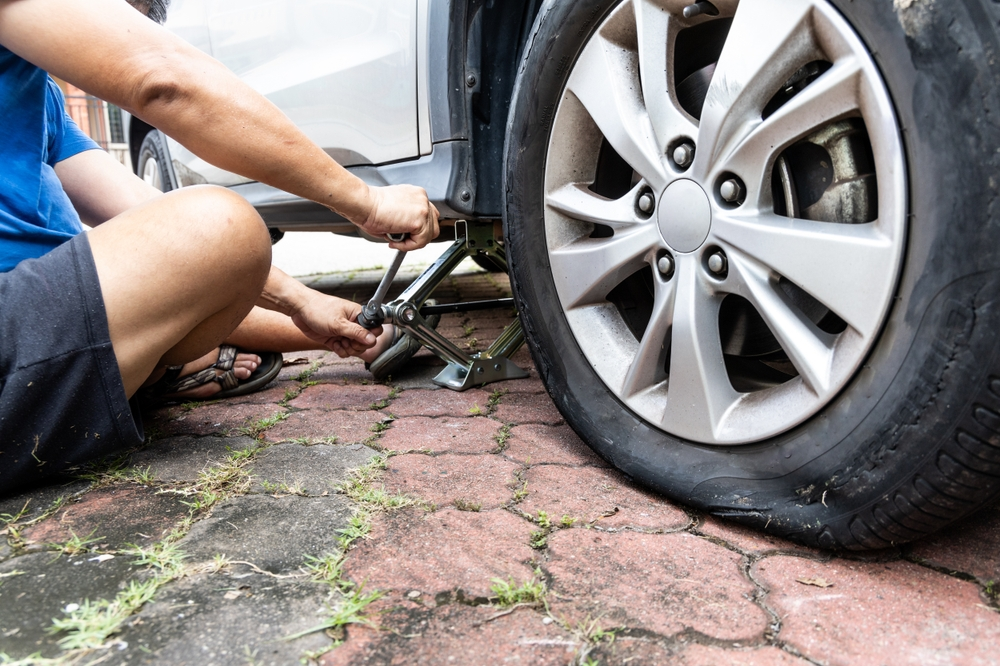
A flat tyre can happen at the most inconvenient time; on your way to work, school pick up, during a road trip, or even late at night. Knowing how to change a flat tyre is an essential skill that can save you time, money, and stress. Instead of waiting for roadside assistance, you can safely handle the situation yourself if you understand the correct process.
What Causes a Flat Tyre?
Understanding the cause of a flat tyre helps you prevent future issues. Some of the most common reasons include:
- Punctured tyre from nails, screws, or glass
- Tyre blowout due to overheating or overloading
- Low tyre pressure from slow air leaks
- Damaged valve stem causing gradual air loss
Other contributing factors include:
- Sharp objects on the road
- Worn tread that weakens tyre structure
- Poor tyre pressure maintenance
- Sidewall damage from curbs or potholes
Regular inspections are always encouraged in the hope to reduce the chances of being stranded unexpectedly.
Tools You Need to Change a Flat Tyre
Before starting, ensure you have the correct tools in your vehicle. These are essential for a safe and smooth tyre change.
- Spare tyre (check pressure first to ensure its safe)
- Car jack
- Wheel brace/lug wrench
- Locking wheel nut key (if applicable)
- Wheel wedges
- Gloves and a torch (especially for night safety)
Many drivers forget to check the condition of their spare tyre. Make it a habit to inspect it regularly to ensure it’s ready when needed.
If you ever require replacement components, such as Holden engine and body parts or Ford Falcon spare parts, sourcing quality components from reputable suppliers ensures long-term reliability.
Step-by-Step Guide to Changing a Flat Tyre
Follow these steps carefully to change your tyre safely and efficiently.
Step 1 – Find a Safe Location
Your safety comes first.
- Move to flat, stable ground away from traffic
- Turn on hazard lights
- Apply the handbrake
Avoid changing a tyre on a slope or uneven surface.
Step 2 – Secure the Vehicle
- Place wheel wedges behind the tyres
- Engage first gear (manual) or park mode (automatic)
This prevents the vehicle from rolling while lifted.
Step 3 – Loosen the Wheel Nuts
Before using the car jack:
- Loosen the wheel nuts slightly
- Turn anti-clockwise
- Do not fully remove them yet
Loosening nuts while the tyre is still on the ground prevents the wheel from spinning.
Step 4 – Position the Car Jack Correctly
- Locate the manufacturer’s jack points (usually near the wheel arch)
- Position the jack securely
- Raise the vehicle slowly until the flat tyre is off the ground
Incorrect jack placement can damage your vehicle’s underbody.
Step 5 – Remove the Flat Tyre
- Fully unscrew the wheel nuts
- Remove the flat tyre carefully
- Store the nuts safely to avoid losing them
Place the flat tyre flat on the ground to prevent it from rolling.
Step 6 – Mount the Spare Tyre
- Align the spare tyre with the wheel bolts
- Push it into position
- Hand-tighten the nuts first
Make sure the tyre sits flush against the hub.
Step 7 – Lower the Vehicle and Tighten Nuts
- Slowly lower the vehicle using the car jack
- Once on the ground, tighten the wheel nuts fully
- Use a star pattern to ensure even pressure
- Ensure proper torque
Even tightening prevents wheel imbalance and improves safety.
Step 8 – Check Tyre Pressure
- Ensure the spare tyre has the correct PSI
- Visit a nearby service station if needed
Driving with incorrect tyre pressure can reduce vehicle stability and tyre lifespan.
If your tyre damage is beyond repair, sourcing affordable replacements from trusted car wreckers in Dandenong can be a cost-effective solution. You can also learn more about vehicle recycling and parts sourcing by reading How Do Salvage Yards Work, which explains the process in detail.
Common Mistakes to Avoid When Changing a Tyre
Avoiding common errors can make the process safer and prevent vehicle damage.
- Lifting the car before loosening wheel nuts
- Changing the tyre on uneven ground
- Forgetting to use wheel wedges
- Not tightening nuts properly
- Ignoring the spare tyre pressure
Many roadside accidents happen because drivers rush the process. Take your time and prioritise safety.
Frequently Asked Questions
How long does it take to change a flat tyre?
For most people, it takes between 15–30 minutes. With practice, it can be done faster.
Is it safe to change a tyre on the motorway?
It is generally unsafe. If possible, move to a safer location away from traffic. If you cannot do so safely, call roadside assistance.
Can I reuse wheel nuts?
Yes, as long as they are not damaged or stripped. Inspect them before reinstalling.
How tight should wheel nuts be?
Wheel nuts should be tightened firmly using a wheel brace. Ideally, they should be torqued according to the manufacturer’s specifications to ensure maximum safety.
Final Thoughts
Learning how to change a flat tyre step by step empowers you to handle roadside emergencies confidently. With the right tools, proper safety measures, and careful attention to detail, changing a tyre is straightforward.
Regular tyre inspections, proper tyre pressure, and timely replacements will reduce the likelihood of unexpected tyre failures. And if you ever need affordable parts or replacement components, exploring options like salvage yards and professional wreckers can help you stay on the road without overspending.


